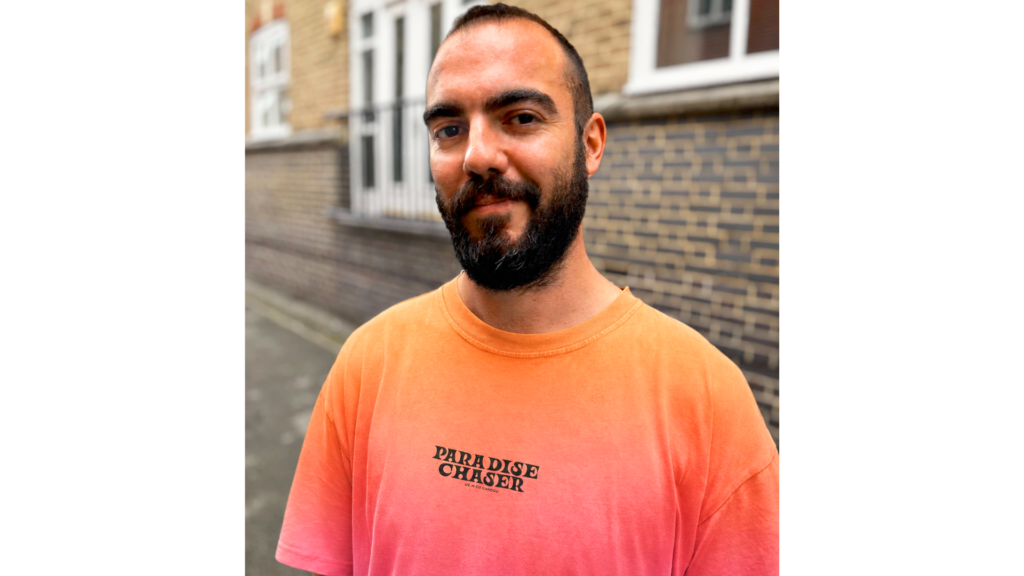

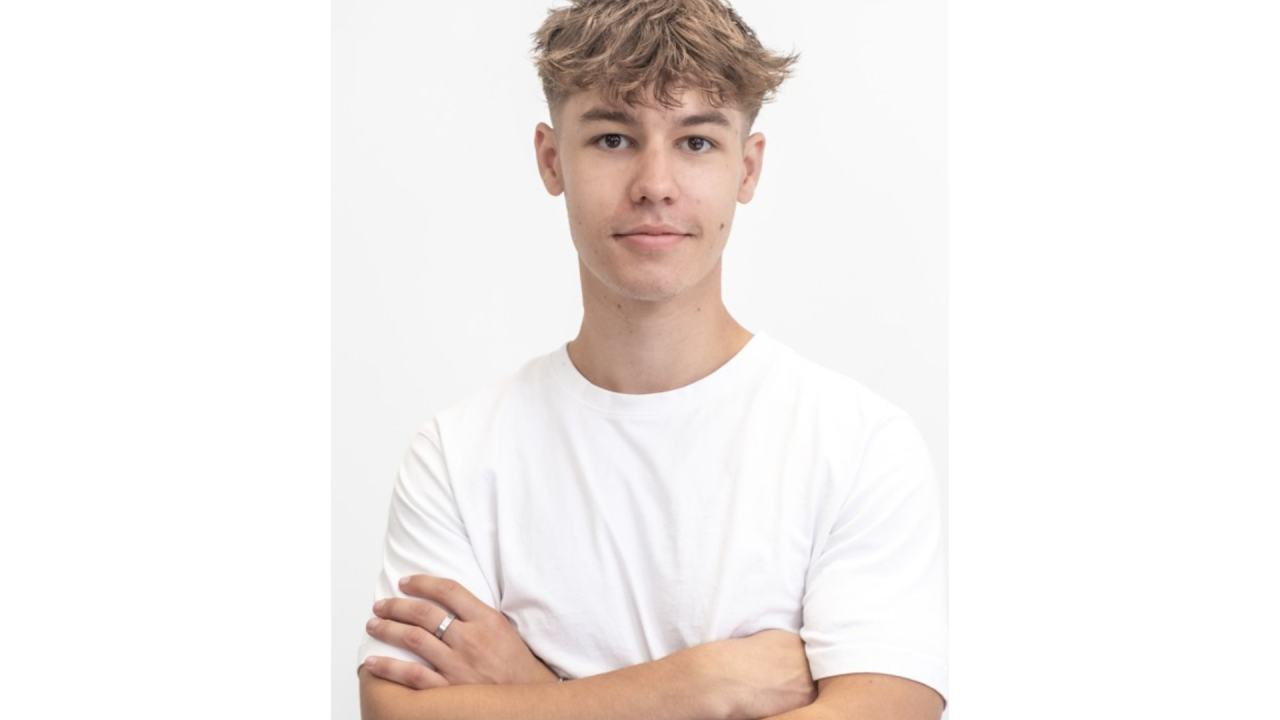
By Angus Todd
I came into Collider in March on a three-month rotational internship, working across Client Services, Production, Strategy & Innovation, and Creative. I thought I had a decent handle on what I was walking into. Three years inside Red Bull as a Student Marketeer Captain and Festival Activator, four years co-founding Culture Collective – brand activation and creative work weren’t new ground for me.
Turns out it’s a different game than I had expected.
Expectations vs. Reality
From the brand side, I knew activation. I knew how a Red Bull international campaign gets briefed, how festival activations run, how to properly brief bar staff on a perfect serve at 2am. What I hadn’t seen was the agency-side machine underneath – the part that happens months before the activation exists, where ideas are formulated, and executed.
The agency structure was my first surprise. I’d assumed it would be specialised – strategy in one corner, production in another, creative doing their own thing, with occasional crossover. The reality at Collider is kaleidoscopic. A sprint conversation in March turns into a physical decision in May. Strategy doesn’t end when production starts. Creative isn’t a closed room. Everyone’s running interference for everyone else, and that’s why the work that comes out of here actually lands.
Month One – Client Services
Week one started with Tapping Into Gaming Culture, Collider’s own event on brand engagement and the psychology of play. I had felt it was a useful place to land in the first week – the agency’s whole thesis (behavioural science meets brand experience) was on display before I’d even opened my laptop.
Then meetings with each director to understand how the place fits together, and into Client Services with Sonny and Izzy.
The standout from this month was Red Bull Wololo. On paper: player schedule coordination, production support, broadcast, set-up and pack-down. In practice: the clearest “ah, that’s how it works” moment of the rotation. I’ve activated Red Bull for years. I’d never watched an event start to finish from the inside – how the Run of Show gets stress-tested, broken down, and then put back together again as something that feels effortless on the day. It isn’t effortless. It’s engineered.
Around Wololo: John Lewis Easter (on-day logistics and production, working directly with the client and their top customers), Out and About (researching live experiences across London for the team’s primary research bank), and John Lewis Food and Drink Festival floor planning on the new internal platform with Izzy. Plus a couple of others I’ll leave coded – vendor sourcing across Berlin and Shoreditch for a certain pocket monster franchise, and outreach for coffee, musicians and plants on a global energy-trade stand build.
Month Two – Strategy & Innovation
Different team, different speed. Moved across to Charlotte’s team for month two.
Sonar was where I could be most useful. It’s Charlotte’s internal AI agent – a tool that helps brands map their gamer profile and figure out how to actually show up in gaming culture. I built and deployed the live website with AI integration. My Software Engineering background meant I could move quickly on it, and there’s a particular satisfaction in watching something go from a doc to a URL to a working tool the team can actually point at. Sonar’s also where the agency’s gaming thesis lives most visibly: gaming isn’t a vertical, it’s a behavioural model – progression, mastery, social status. The brands that figure out how to borrow those mechanics will own the next decade. Collider’s there already.
Gamescom 2026 was the other one – predicting the exhibitor list, then writing the sales outreach (email and LinkedIn). Less obviously glamorous than Sonar, but useful in a different way: it forced me to think about how Collider talks to the industry, not just to existing clients.
In the background: a brand identity workout for an emerging fintech, weekly sprints on a 2026 Christmas retail activation, and a brief at the intersection of music and gaming for a major spirits brand – which got me properly into the boundaries of alcohol marketing regulation. It was a busy month leaning more on my personal skillset, and applying it.
Month Three – Building And Automating
Month three was the one where everything started running in parallel, which is probably the honest version of what working here actually looks like. Sonar v2 kept rolling – continued development and finalised into a beta to be sent out to the team, which sounds simple written down but had a few of those evenings where you fix one thing and break two.
Alongside that I started on an AI weekly digest in n8n – early stages, but got a first run working end-to-end: pulling and summarising new advancements in experiential and feeding them back to me. The aim is small but specific: kill the “have you seen this?” forward.
Around the build work, Charlotte let me sit in on new brief landings and strategy meetings as they came through – across a few different clients and sectors. Less about delivering on any one of them and more about watching how a brief gets unpacked in the room: what gets asked first, what gets parked, ensuring we stay on track, and how a problem gets turned into a direction. In honesty this probably taught me more about how strategy actually works than any single project would have.
In the background: organising Collider’s team night around Traitors Live Experience, and our involvement in 27Names, the charity initiative where we volunteered and raised £X to help get food to people in crisis.
Would I Recommend It?
Yes – but with one bit of advice.
I came in with two objectives: push the needle in some way, and learn as much as I could. Both worked because I leaned into something specific. The rotation works because you’re moving across teams, but the bit that makes it valuable is what you bring with you – and what you take from everyone around you while you’re there. CS background and React experience meant Sonar was a project I could actually move on rather than just watch. Years activating Red Bull meant Wololo wasn’t a black box. The most useful thing I did over three months wasn’t being a generalist – it was being specifically useful in the moments where what I knew lined up with what was needed, and soaking up everything I didn’t in the moments it didn’t.
If you turn up as a generic pair of hands, you’ll have a good internship. If you turn up with a thing – a skill, a perspective, a sector you know inside out – and bring your personality with you while still doing the work, you’ll have a great one. The team here will support you wherever you bring something real. Even if you have not yet found this, you will come out with a better sense of understanding.
The agency-side view of brand activation is a different sport. Gaming is a behavioural model, not a vertical. Strategy and production are the same job at different timestamps – the reason this place gets it right is that nobody treats the floor plan as separate from the insight.
Three months, four departments, a fair amount of pack-down. Thanks to Anton, Charlotte, Tracy, Sonny, Izzy, Frankie, Ian, Josh, Natasha, Fernando, Jurate, Anastasia, Kit, Mark, Nicole, Jon, Jonathan, Ohood, Rebecca, and the wider team for making the rotation work.
We Are Collider x
Edit: The best news? I’ve been offered an extension as a Growth and Innovation Assistant, and I’m incredibly excited to see what the next three months bring!
Angus Todd is a Computing & Management graduate from Loughborough, co-founder of Culture Collective, former Red Bull Student Marketeer Captain, and joined Collider in March 2026 for a three-month rotational internship across Client Services, Production, Creative, and Strategy & Innovation.