
After years of rapid growth, the no and low alcohol category is now firmly in the spotlight — with the reasons behind its rise fizzing and foaming through national news like the head on a freshly poured Punk AF.
Some attribute this shift to health concerns, others to moderation, others still to functional ingredients, or the fact that a whole is generation rethinking its relationship with alcohol. The real question however, is how brands are going to connect with evolving cultural values, which means this whole “no/low” category is about a lot more than just ABV.
Premiumisation gaps, scepticism around taste and Gen Z’s shifting habits all point to the same issue: people are not simply swapping alcohol for a technical equivalent. They are rethinking what drinking means in their lives, which changes the role brands have to play. At We Are Collider, our recent research ‘The Experience Index’, shows how expectations have evolved. People may be looking for entertainment, but they also want meaning, trust, usefulness and a sense of identity, and the same is just as true for no and low-alcohol brands as any other category.
In today’s blog, we crack things open and take a look at what’s going on.
Trend 1. People want more than fun, they want meaning
Experiences still need to be enjoyable, but enjoyment alone is no longer enough. Our Experience Index research showed a striking duality: with 49% of people attending brand experiences for fun, and the same proportion saying they want to learn something useful. That is not a contradiction; it is a signal. People want experiences that both entertain them and improve their lives.
This is especially true among Millennials and Gen X, who tend to look for depth, purpose, and practical value. They want something they can take away, not just something they can post. For no- and low-alcohol brands, sampling alone will not build loyalty. People need to understand how products fit into their routines and rituals, whether that means learning about ingredients, understanding functional benefits, or discovering new social moments that feel intentional rather than like a compromise. When experiences give people a sense of progress, they feel more meaningful, and that meaning becomes a competitive edge.
Trend 2. Gen Z may not be drinking, but they aren’t settling either
The next generation is drinking less, but that does not automatically translate into no-alcohol purchases. More than half of Gen Z globally say they are cutting back for health reasons, yet in markets like the UK, only around 22% regularly buy no-alcohol beer or cider. The gap here is cultural, not functional, as Gen Z expect brands to contribute to their identity and gravitate towards experiences that are visually striking, socially shareable, and rooted in communities or scenes they care about. They seek expression, not abstinence, and adjacent categories like CBD and functional drinks already feel more culturally relevant, helping brands foster a sense of belonging and relevance.
For no- and low-alcohol brands, the product is only part of the story. The experience around it must reflect who it is for and what it stands for, building trust through authenticity. Creative collaborations, immersive pop-ups, or social spaces rooted in real subcultures can help, as if the experience feels authentic and meaningful, it will resonate deeply and foster trust.
Trend 3. Trust grows through experience
Trust remains a major barrier in this category. Many people still question taste, quality, and authenticity, and some assume that no- and low-sugar products are overly processed or lack craft. Experiences are one of the fastest ways to address that scepticism. Our research shows that 72% of people say brand experiences increase trust, while 73% say they improve their perception of a brand. For older audiences, especially Boomers, clarity and usefulness matter even more. They want to understand what they are drinking and why it is worth their time.
Experiences can make the invisible visible. Instead of relying on claims, brands can show sourcing, explain the process, and demonstrate quality first-hand. Tastings, guided sessions, and interactive workshops help demystify the product. When people can touch, taste, and understand the brand for themselves, trust grows naturally.
Trend 4. Loyalty comes from personalisation and consistency
Acquisition is only the first step. Long-term growth depends on loyalty, and loyalty is built through experiences that feel personal and consistent over time. According to the Experience Index, 66% of people say they remain loyal to brands that deliver consistent, personalised experiences.
This is where many no- and low-alcohol brands fall short. Too often, they mimic traditional alcohol activations, relying on generic sampling bars or one-off pop-ups. The result is a lack of ritual and continuity. Strong brands create their own world. They develop recognisable cues, repeatable formats, and a clear sense of what people can expect. We have seen this approach work in practice.
A toast to Heineken, who are nailing it in this space
Heineken’s Player 0.0 is a global gaming activation built to deliver its responsible drinking message in a culturally relevant way. Created with Max Verstappen under the When You Drive, Never Drink platform, it turns moderation into gameplay. A mobile racing game rewards safe driving with access to higher levels, real-world sim-racing events, and the chance to compete against Verstappen himself. Embedding the behaviour into the experience makes responsibility feel aspirational rather than restrictive.
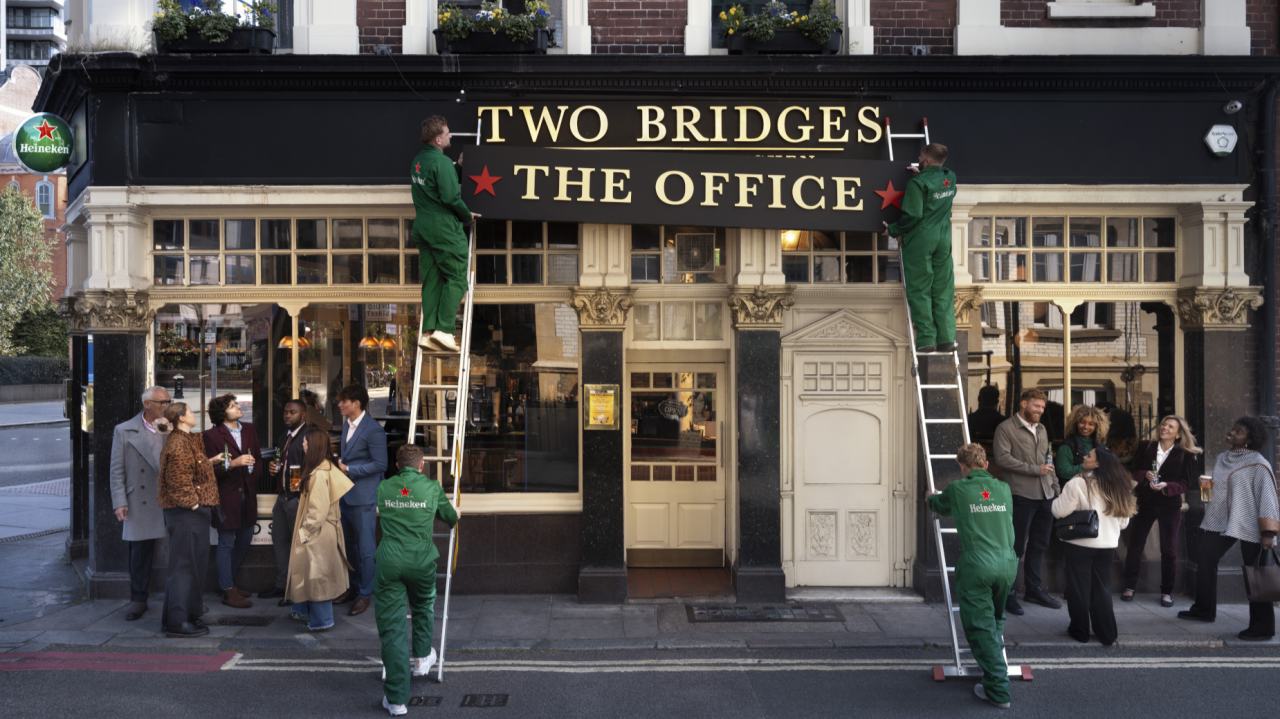
Heineken’s other “The Office” campaign responded to the rise of hybrid work by temporarily renaming more than 1,000 UK pubs “The Office.” Workers could redeem a free pint of Heineken Original or Heineken 0.0 after 4:59 pm, turning the pub into a new social workplace. The idea was simple but culturally sharp: if people were not connecting in the office, the office could move to them. It reframed after-work drinks as a social ritual and made moderation part of the moment.
The new rules of no and low alcohol marketing
Taken together, these insights point to a clear shift: people want experiences that combine fun with usefulness, reflect their identity, build trust through transparency, and stay consistent over time. For no- and low-alcohol brands, this is a huge opportunity. The category is still young, and its cultural codes are still forming, which means the brands that shape new rituals, spaces, and meanings around drinking will define the next decade.
However, this requires more than product innovation. It mandates culturally fluent, behaviour-led experiences that fit into real lives. At We Are Collider, we use tools like the Experience Index and MARVELS™ to design experiences that change behaviour, not just capture attention. We focus on what people actually need, feel, and do, then build ideas around those truths, because in this category, relevance is not given. It’s earned.
Ready to create culturally fluent, insight-driven experiences for your no- and low alcohol brand? Speak to Anton Jerges to explore how the Experience Index and MARVELS™ can elevate your next activation. 📩 anton.jerges@wearecollider.com
Image source: Heineken