

The European Experience Index (EEX) is one of those rare analytical creatures: a real ‘state of the nation’ insight into our industry, cutting through the noise to show what truly matters.
The first live-experience benchmark of its kind (combining client and agency perspectives across 27 European markets), it holds up a mirror to the world of brand experiences, offering a fair and frank assessment of the widening gulf between expectations and reality.
THE SUSTAINABILITY REALITY CHECK
Through our membership of 27Names, We Are Collider had early access to the findings, and one theme leapt off the page: sustainability.
Over the last decade, sustainability has moved from a side conversation to a critical pillar of brand experience strategy. Clients, juries, and audiences now expect it to be addressed in the experience itself, and 48% of agencies surveyed in the EEX told the reviewers that more than half of their clients now request sustainability credentials as standard. At We Are Collider, we are already tapping into this trend, having recently developed our own tool, Green Gauge, to help clients make more sustainability-minded decisions at the design stage, rather than just via post-show analysis.
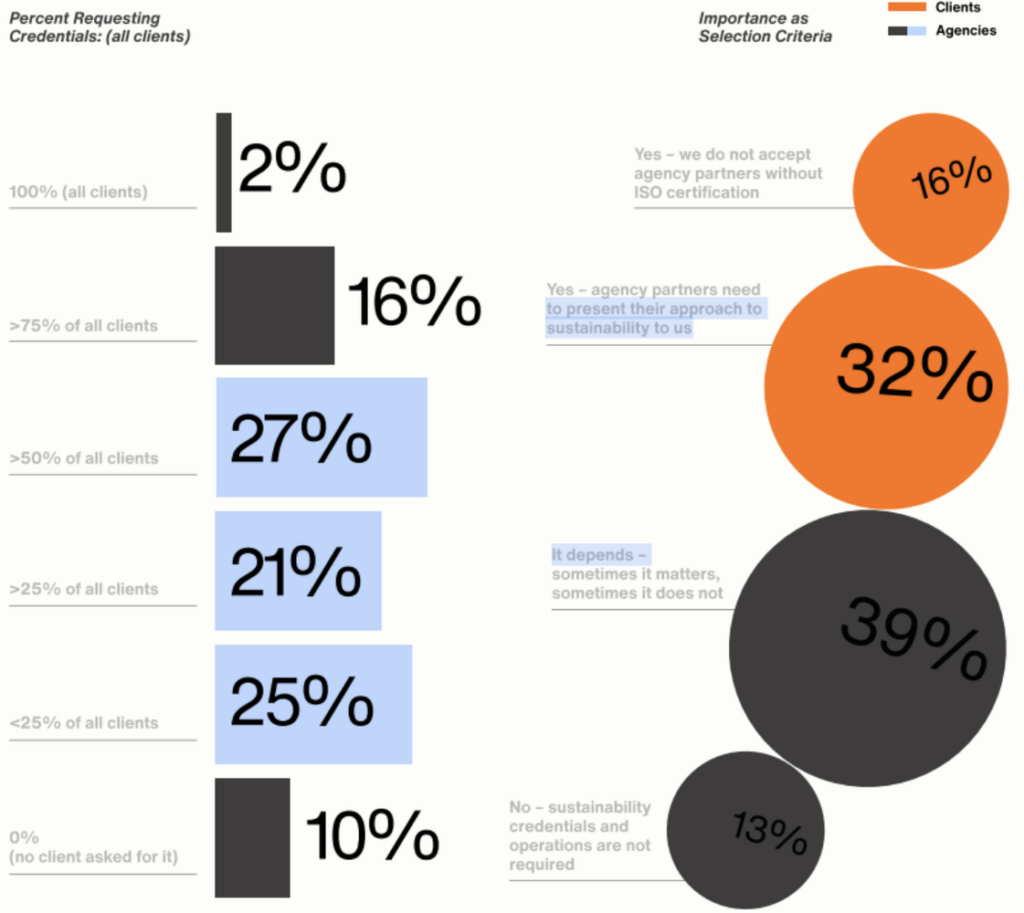
However, the EEX also flags up an uncomfortable truth many agencies are sometimes hesitant to acknowledge: that expectations are rising while investments are not. 48% of clients might request sustainability, but only 2% require it. Or, as the report puts it: “a significant and problematic chasm has opened between these proclaimed ideals and the financial realities of their implementation. The data reveals a clear paradox, that while sustainability has become a non-negotiable mandate in principle, it remains a largely unfunded one in practice.”
THE SUSTAINABILITY FUNDING GAP
Where the EEX gets very spicy is in investigating the reasons for this disparity. Across all the agencies surveyed, the report identified a clear “funding gap” between the proportion of clients asking for sustainability and the proportion willing to stump up and pay for it. On average, that works out as a –30.2 point funding gap – essentially, a big gap between clients’ sustainability expectations and their willingness to fund them.
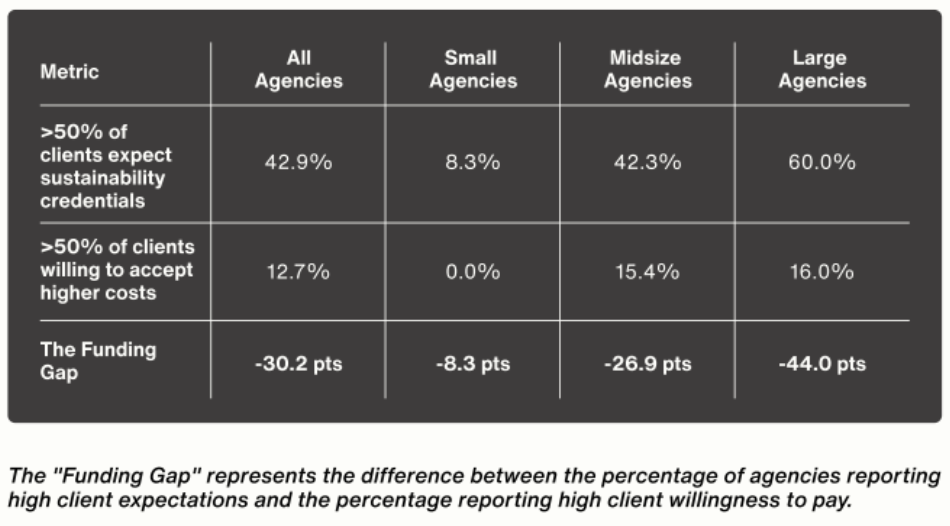
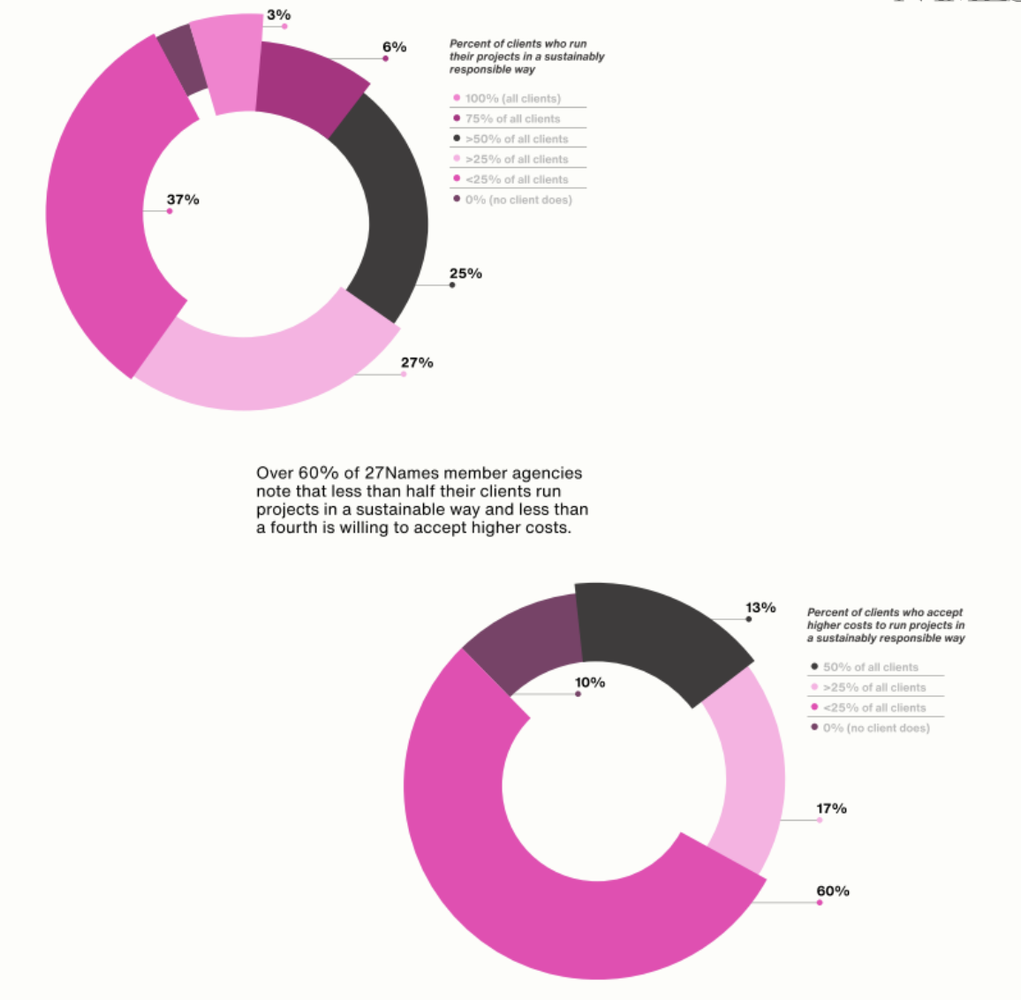
The pattern varies by agency size, but the direction of travel is clear: smaller agencies report a narrower gap, larger agencies see a wider one. In practical terms, this means the demand for sustainability is growing faster than the budgets that support it. Other data backs this up, with more than 60% of agencies reporting that fewer than half of their clients currently run projects sustainably, and less than a quarter are willing to accept higher costs linked to sustainable production choices.
PRACTICALITY OVER PRINCIPLES: ENTER ‘SMART SUSTAINABILITY’
It isn’t difficult to see why. Organisations are under huge pressure to control costs while also responding to rising expectations from stakeholders and audiences. The result is a wearily familiar challenge for agencies: deliver more value, accountability, and environmental consideration, only with the same (or in many cases lower) budgets.
However, one of the most constructive aspects of the EEX is that it doesn’t stop at identifying problems: it shows how some agencies are beginning to dream up practical solutions. Across the 27Names network, teams are now developing tools and methods that make sustainability more measurable. These range from impact-tracking platforms to frameworks that help reduce emissions in the areas that matter most: travel and mobility, technical production, signage, venue choice, and catering.
For example, Belgian member VO Group has created MyImpactTool to measure the impact of events in this area, which offers five high-impact actions to cut emissions: travel and mobility, technical production, signage, venue choice, food and catering. There are also fantastic examples of agencies collaborating across markets. Initiatives such as the ‘Nordic Tech Sustainability Awards,’ delivered in Helsinki, Oslo and Stockholm by network agencies Fieldwork, Utsikt and Lataamo, demonstrate that sustainable live experiences are achievable, even when budgets are tight.
THE COLLIDER TAKE: DESIGN IT IN FROM THE START
At We Are Collider, we are painfully aware of the pressures highlighted in the EEX. Clients may care deeply about sustainability, but they are also dealing with a slew of commercial and macroeconomic constraints. Agencies, meanwhile, are expected to deliver creative impact while working within ever-tighter frameworks, creating the perfect storm of adversity.
The solution, therefore, is less what, more when. The industry needs to stop looking at sustainability as if it is an optional add-on or something to be sprinkled on after the event. This is the thinking that led us to develop the ‘Green Gauge’ tool we mentioned earlier, something we use to help clients make conscious sustainability decisions during an experience’s design stage. Instead of trying to come and fix things after the fact, we work through key choices as early on as we can: working on production methods, travel planning, materials and supplier networks, for example. This means sustainability is a structured part of the brief rather than a line item at the end.
This approach reflects a broader shift across the 27Names community. Agencies are moving towards an informed decision-making style, one that tries to minimise a company’s impact while still protecting the creative quality and budget control that are so essential. In practice, that means applying behavioural science to operational choices, as when you understand how decisions are made, you can shape them earlier. That way, sustainability becomes less about last-minute adjustments and more about intelligent planning.
IN CONCLUSION
The EEX findings are clear: to succeed, sustainability has to be embedded in brand experience strategy from the very start. Expectations will continue to rise while budgets remain stagnant, meaning the only way forward is with better tools, clearer data, and earlier implementation.
We Are Collider is committed to helping clients navigate that shift, drawing on insights from across the 27-market network and applying them to practical, achievable solutions.
If you’re looking to make your next experience more sustainable without compromising creativity or cost-control, we’d love to chat.
Image sources: 27Names