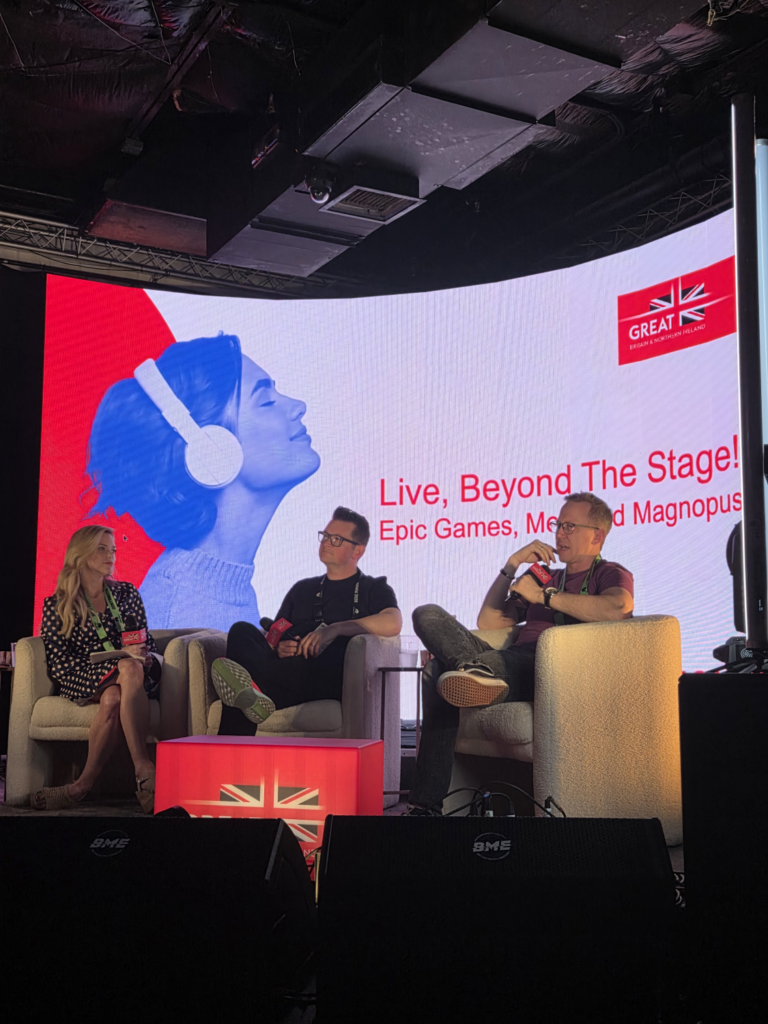

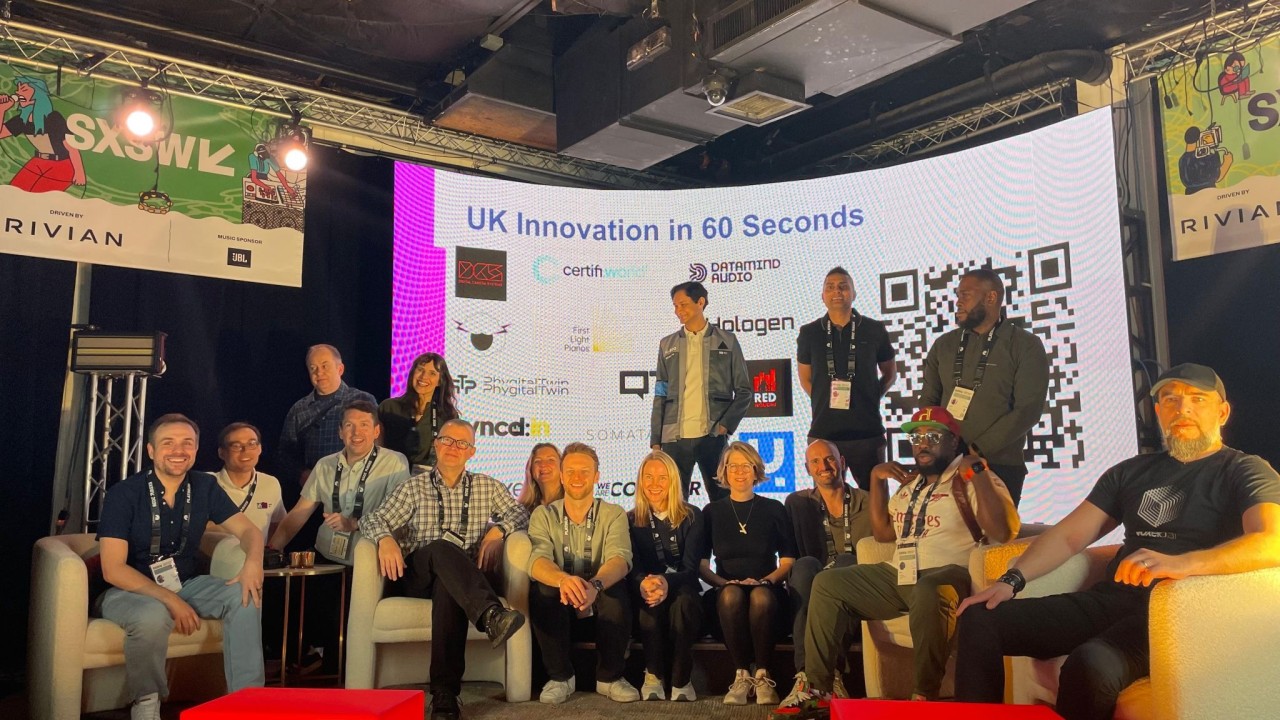
As an agency that knows a thing or two about experiences, we sometimes get to attend one that reaffirms exactly why we’re in this business. Each year, hundreds of thousands of global events vie for the attention of international audiences, but few have the heft, prestige, name recognition and sheer cultural brawn of the SXSW festival in Austin, Texas.
A veritable mecca of music, marketing, technology, and cultural thinking, it is a place where the world’s greatest minds come together to showcase and challenge one another. SXSW remains a lodestar for emerging ideas and innovation, particularly in the creative industries. Over the last few decades, it has cemented itself as the place to be for conversations about the future.
This year, We Are Collider were lucky enough to travel stateside as part of the Innovate UK Global Business Innovation Programme. Charlotte Bunyan, our Head of Strategy & Innovation and Managing Director and Co-Founder of Arq , was our woman on the ground.
This blog is based on Charlotte’s time at SXSW, and lays out five takeaways that highlight what might be coming next in the world of creative technology and brand experiences.
TAKEAWAY #1: AI IS MOVING FROM TOOL TO INFRASTRUCTURE
To absolutely nobody’s surprise, AI dominated the agenda. However, Charlotte was unsurprised to discover that the tone of the conversation had changed. A year ago, talks centred on productivity gains and efficiency, but at SXSW 2026, those benefits felt like table stakes.
That sort of thinking is old news, and the discussion has now moved on to how AI sits inside businesses as core infrastructure. One theme that surfaced repeatedly was the shift towards agentic workflows, systems that can run multi-step processes, learning and adapting as they go. One concept was that of a “virtual gym of the future,” a space where both real and synthetic audiences can test innovations together before anything launches in the real world. It was a powerful reminder that experimentation is becoming cheaper, faster and more continuous. That said, there was also a healthy scepticism in the room about AI and the tech companies enabling them (all this in a week when Meta was fined $375 million, no less), yet it was noticeable that the smartest voices were embracing uncertainty and experimentation.
TAKEAWAY #2: ‘CONTROL’ AND EMBEDDABLE CULTURAL REBELS
Another strong theme across panels and brand talks was that of culture. Not the old question of how brands “enter” culture, mind you, the discussion had moved to something more pointed: how brands stay relevant within it. Louis Restrepo, CMO of Taco Bell, spoke about building organisations that act like “cultural rebels,” namely brands that don’t interrupt culture but integrate into it through partnerships with entertainment properties or by creating experiences that audiences genuinely want to take part in.
Charlotte observed a similar principle emerging: the idea that culture works best when it is rooted in brand DNA. If the behaviour doesn’t come from the core of the brand, audiences will spot it instantly. There was also a lot of talk around ‘control,’ with brands learning to act as stewards rather than gatekeepers. Platforms like Reddit were cited repeatedly as places where unfiltered feedback helps brands stay honest about how they are perceived. The takeaway was clear: understand your audience’s world, listen closely, and participate in existing spaces rather than trying to manufacture them from scratch.
TAKEAWAY #3: CREATIVITY AND COMMERCIALITY ARE BACK IN BALANCE
Neat alliterative phrases were popular; Taco Bell’s CMO talked about “math and magic,” while Unilever’s CMO, Leandro Barreto, framed it as “poetry and plumbing.” Regardless of the phrasing, the consensus was the same: brands can’t afford to obsess over short‑term ROI at the expense of long‑term brand building. Metrics and KPIs matter, of course, but so do the softer signals such as cultural impact, relevance and emotional connection.
One of the strongest insights was the power of community over pure paid reach. Barreto captured it perfectly when he said, “Many communities are bigger than your media budget. So it’s more cost effective to engage them and boost with paid.” When audiences feel genuinely involved rather than simply targeted, they naturally take on some of the distribution themselves and amplify ideas far beyond what paid media alone can deliver.
TAKEAWAY #4: THE PHYSICAL AND DIGITAL ARE NOW ONE
The blending of physical and digital experiences — what some still call “phygital” — is no longer experimental. Entertainment brands in particular are thinking in terms of worlds rather than campaigns, with fans moving between platforms and formats seamlessly, so the experience has to travel with them.
Examples ranged from live concerts with digital twins in gaming platforms to brands creating environments where audiences shift from watching to participating. Or, as one speaker put it: “On Sunday, I want to watch James Bond. On Monday, I want to be him.”
TAKEAWAY #5: THE EXPERIENCE ECONOMY CONTINUES TO EXPAND
The growth of brand-owned experiences continues apace. Taco Bell’s ‘Live Mas’ festival was one example, designed for fans first, then broadcast to a wider audience. SunnieFest, launched last year for Gen Z women by Reese Witherspoon and her Hello Sunshine brand, was another example of a brand building its own cultural platform.
At the same time, entertainment is becoming embedded across multiple channels, with gaming and XR studios working alongside IP owners to extend fan worlds beyond a single medium. A good illustration is the Daft Punk x Lego experience on Fortnite, which mixed a concert with a creator-led music environment where players built the performance themselves, driving renewed interest in the band’s catalogue online.
Alongside this expansion of digital worlds, there was also a clear counter-trend at SXSW: people want connection. Speakers pointed to community-driven experiences that bring audiences together IRL, as well as a growing willingness to pay for high-quality, ticketed experiences rather than expecting everything to be free. Even Steven Spielberg returned to the same idea, highlighting how shared experiences such as cinema, sport or live performance still play a powerful role in creating a sense of collective belonging.
THE COLLIDER VIEW
SXSW rarely provides neat conclusions, but it does offer a sense of direction and a snapshot of where the industry’s collective attention is heading. This year, three takeaways stood out: first, that even as technology is accelerating, human judgment is only becoming more valuable; second, that brands are shifting from campaigns to ecosystems of experiences; third, that the agencies that ultimately make a success of themselves will be the ones with clear, differentiated expertise.
Charlotte returned from Austin tired, wired and more than a little inspired. “There is a wonderful weirdness that defines this place,” she wrote on LinkedIn. “Where else would you find Steven Spielberg sharing how his experience of downloading Instagram left him feeling as if he’d been abducted by aliens? Or an autonomous robot known as Rizzbot wandering Congress Avenue, delivering both compliments and insults to passers-by? Or the most beautiful, poetic, interactive VR experience about dementia, A Long Goodbye, that made me cry in the headset and afterwards.”
For us, that’s the sign of a good festival.